

Tele-behavioral health is no longer just a convenient alternative to in-person care. It has become a critical part of how mental health services are delivered, making therapy, counseling, psychiatric support, and ongoing care more accessible to patients across locations.
However, building a tele-behavioral health platform requires more than adding video consultations to a healthcare app. These platforms need secure communication, patient intake workflows, appointment scheduling, clinician dashboards, progress tracking, compliance-ready architecture, and a user experience designed around sensitive mental health interactions.
For healthcare providers, startups, clinics, and digital health companies, the real challenge is building a platform that is easy to use, clinically effective, scalable, and secure from the start.
In this guide, we’ll cover what tele-behavioral health platform development means, key platform types, must-have features, compliance and security considerations, development steps, technology choices, cost factors, and future trends shaping the digital mental healthcare space.
Quick Stat:
According to a Grand View Research report, the global telehealth market is projected to exceed $455 billion by 2030, highlighting the rapid shift toward digital healthcare.
What is Tele-Behavioral Health?
Tele-behavioral health is the remote delivery of mental and behavioral healthcare services. Instead of relying only on in-person visits, it supports therapy and support through digital channels.
- Therapy and counseling via secure video or messaging
- Monitoring and check-ins to track progress between sessions
- Consultations between patients and clinicians
Why Tele-Behavioral Health is Growing
- Increased demand for remote care as patients look for faster access
- Accessibility for rural and underserved populations, where specialists may be limited
- Post-pandemic digital transformation that normalized virtual care tools
Role of Platform Development Services
A tele-behavioral health platform doesn’t just “exist” once you pick a video tool. Platform development services help you design and build a system that can scale, stay secure, and meet regulatory requirements while supporting real-world clinical workflows.
- Secure, scalable virtual care systems for long-term operations
- Compliance-ready architecture to protect sensitive health data
- Product support for providers, patients, and administrators
What Is the Tele-Behavioral Health Platform Development Service?
Definition and Scope
A tele-behavioral health platform development service is an end-to-end software development for behavioral healthcare delivery. The scope typically spans web, mobile, and cloud-based systems because mental healthcare platforms rarely live in a single screen.
You might be building:
- Provider portals and clinician dashboards
- Patient apps (web and mobile)
- Admin consoles for operations and reporting
- Cloud infrastructure and API integrations
Key Objectives
- Improve access to mental healthcare with frictionless onboarding and scheduling
- Enhance patient engagement through reminders, guided journeys, and follow-ups
- Ensure secure data handling with encryption, audit trails, and role-based access
Difference from General Telehealth Platforms
General telehealth can work for many specialties, but behavioral health has distinct workflow needs, especially around privacy, session structure, and documentation.
- Behavioral health-specific workflows for intake, treatment, and progress tracking
- Therapy-focused features like session notes and care plans
- Enhanced privacy and compliance controls tuned for sensitive patient data
Types of Tele-Behavioral Health Platforms
Quick Stat:
According to the McKinsey report, telehealth utilization remains 10–15 times higher than pre-pandemic levels, showing that virtual care is now a lasting part of healthcare delivery.
Video Therapy Platforms
One-on-one and group therapy sessions
Video therapy is still one of the core “must-have” formats for many care providers. The platform should make it easy to start sessions, keep them secure, and manage outcomes.
Secure video conferencing with session recording controls
- Session scheduling and reminders
- Controls around recording and consent
- Clinician tools for managing session flow
Remote Patient Monitoring Systems
Track mental health indicators
Remote monitoring adds value between sessions by capturing signals that help clinicians make informed decisions.
Integration with wearable devices and patient-reported data
- Mood and symptom check-ins
- Sleep, activity, and stress-related metrics
- Trend views for clinicians and patients
Mental Health Mobile Applications
Self-care and guided therapy apps
Mobile apps often focus on consistent engagement: psychoeducation, coping tools, and structured support.
Mood tracking, journaling, and AI-based suggestions
- Daily mood tracking
- Journaling prompts and insights
- Optional AI support for recommendations (with clear guardrails)
Integrated Behavioral Health Systems
Combine EHR, billing, and telehealth
An integrated system is where operations meet clinical care. Instead of stitching tools together, you centralize the workflow.
Centralized platform for providers and clinics
- Unified intake, documentation, and care plan management
- Billing workflows and reporting
- Telehealth delivery connected to clinical records
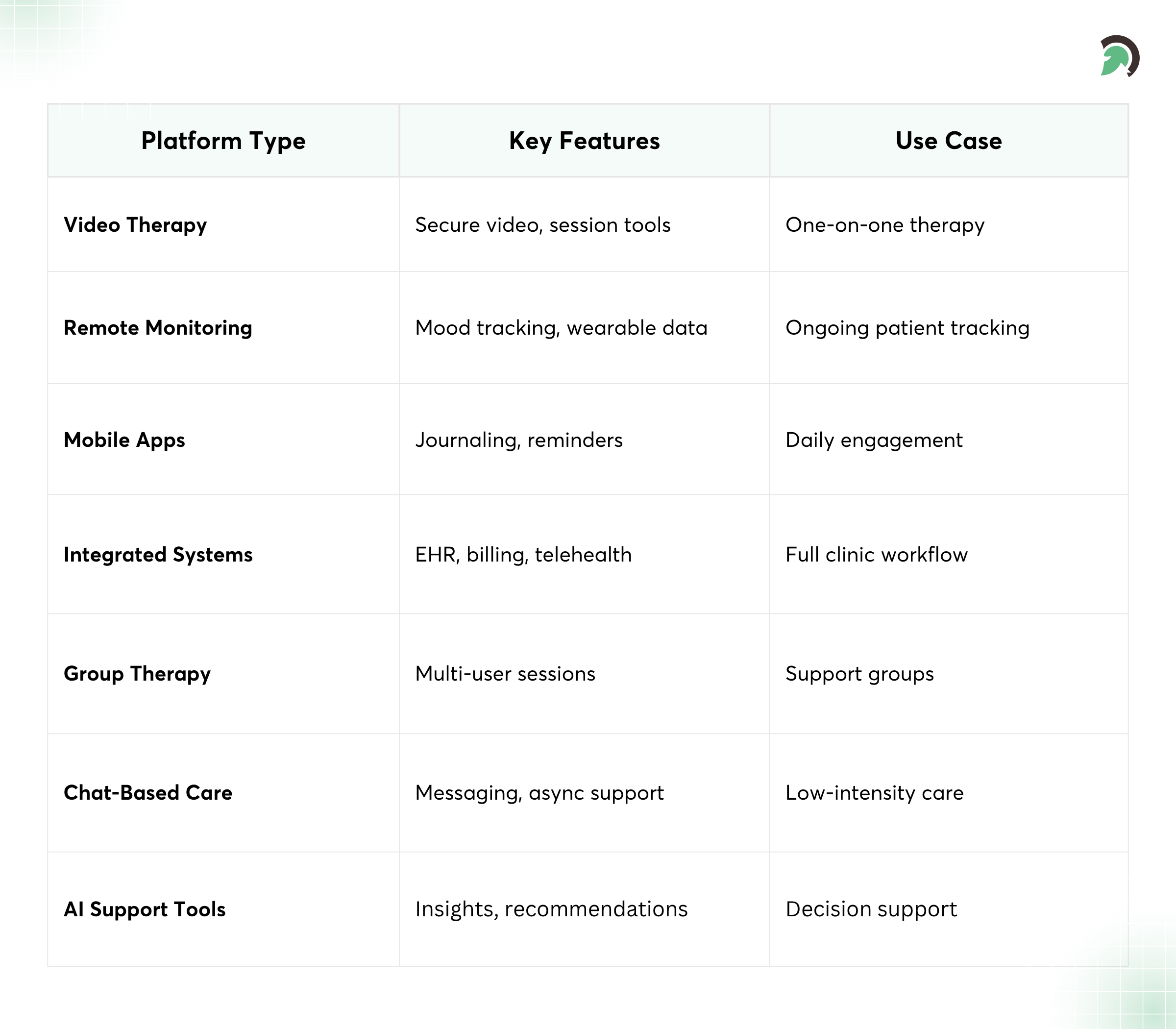
Types of Tele-Behavioral Health Platforms for Modern Care
Core Features of Tele-Behavioral Health Platforms
Patient-Side Features
Appointment scheduling
Patients should be able to book and manage sessions quickly, especially when they’re already dealing with anxiety, low energy, or busy schedules.
- Simple scheduling flows
- Calendar sync and session reminders
- Clear rescheduling and cancellation rules
Secure messaging
Messaging enables communication between sessions. It also reduces friction for follow-ups and clarifications.
Easy onboarding and session reminders
- Guided onboarding for first-time users
- Notification preferences that respect patient comfort
- Session-ready prompts to reduce missed appointments
Provider-Side Features
Session management dashboard
Clinicians need clarity and speed. A good dashboard helps them manage appointments, session status, and patient engagement in one place.
Clinical documentation tools
- Treatment plan and session notes
- Templates for common workflows
- Documentation support that reduces admin load
Treatment planning and notes automation
Automation should assist not overwrite. Smart defaults, structured inputs, and suggested wording can reduce time spent typing while maintaining clinical accuracy.
Admin Features
User and role management
Admins should control access based on role (clinician, therapist, billing, support, etc.). This is essential for security and operational control.
Billing and reporting
- Usage and service reporting
- Invoice generation support
- Audit-friendly logs for compliance
Analytics and performance dashboards
- Operational metrics (uptime, session success rates)
- Engagement metrics (message volume, adherence)
- Service utilization trends
Advanced Features
AI-powered insights
AI can enhance care coordination when used responsibly such as surfacing patterns in check-in data or helping clinicians prepare between sessions.
Chatbots for patient support
Chatbots can handle appointment reminders, basic FAQ support, and triage-style guidance (with escalation paths for urgent cases).
Predictive analytics for risk detection
- Flagging patterns that may indicate rising risk
- Care team alerts with clear thresholds
- Human review workflows rather than fully autonomous decisions
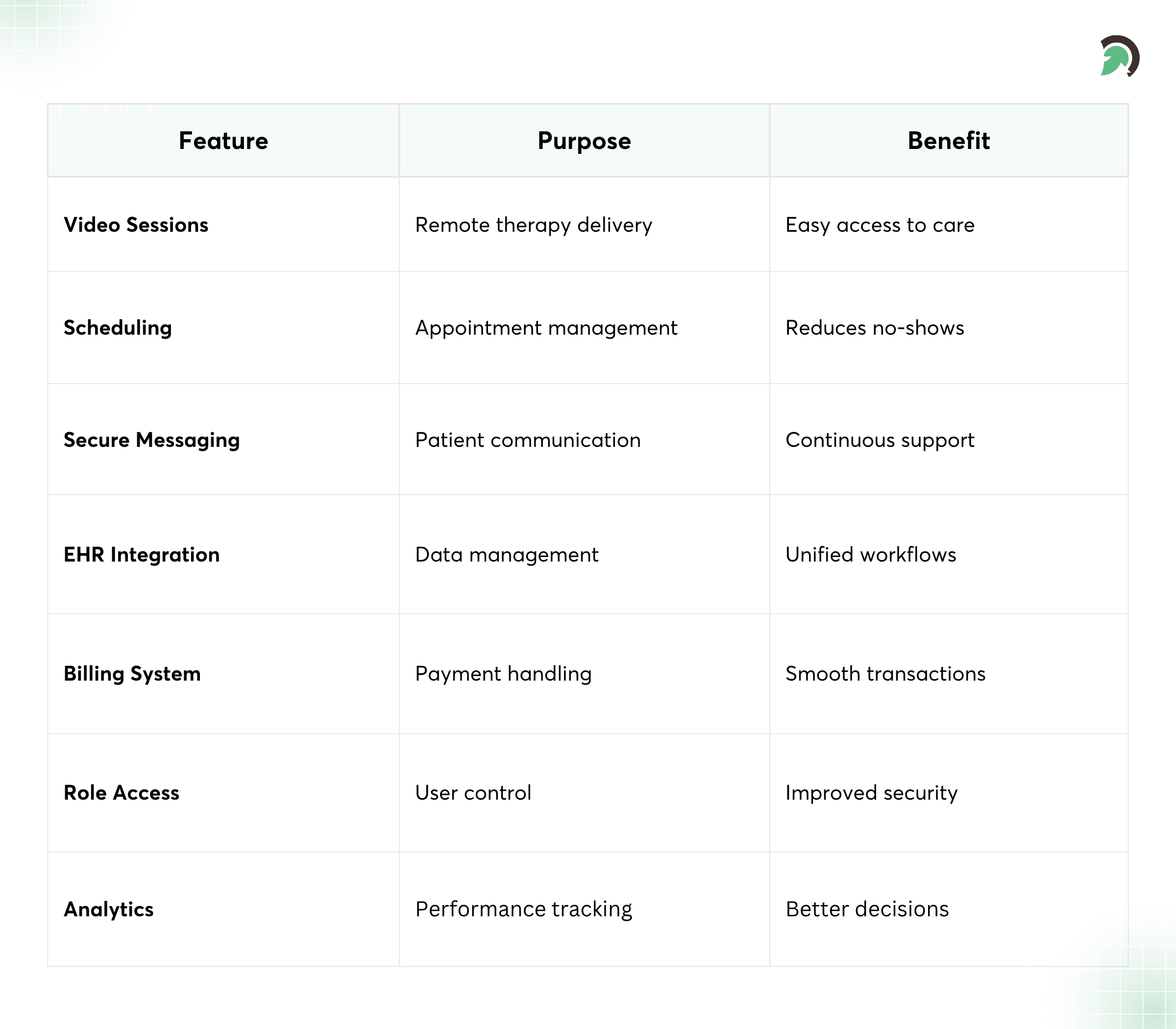
Top Tele-Behavioral Health Software Features for Better Care
Tele-Behavioral Health Platform Development Process
Step 1: Requirement Analysis
This is where product reality meets clinical expectations. A strong project starts with clarity on target users and workflows.
- Identify patients, clinicians, and admin roles
- Map intake → session → documentation → follow-up workflows
- Define what “success” looks like (engagement, outcomes, adoption)
Step 2: Compliance Planning
Compliance isn’t a checklist you handle later it’s part of the architecture.
- HIPAA and other healthcare privacy obligations (USA)
- GDPR considerations where applicable (EU)
- Regional healthcare regulations
Step 3: UI/UX Design
In mental health, usability isn’t just a design preference it impacts safety, trust, and continuity of care.
- Patient-friendly onboarding and simple navigation
- Clinician-focused screens for documentation and session control
- Accessibility considerations (readability, reduced friction)
Step 4: Development Phase
- Frontend and backend development
- API integrations and cloud infrastructure setup
Frontend and backend development
Develop the user experiences (patient and provider) alongside secure backend services that manage data and workflows.
API integrations and cloud infrastructure
Integrate with video services, EHR (if needed), payment systems, and notification providers, then host on a cloud setup designed for healthcare reliability.
Step 5: Testing and QA
- Security testing (including permission checks and vulnerability scanning)
- Performance validation (session stability, load handling)
- Workflow testing with realistic data and edge cases
Step 6: Deployment and Maintenance
Launching is not the end. Continuous updates and monitoring protect reliability and compliance over time.
- Ongoing monitoring of uptime and performance
- Security patches and dependency updates
- Feature iterations based on clinician and patient feedback
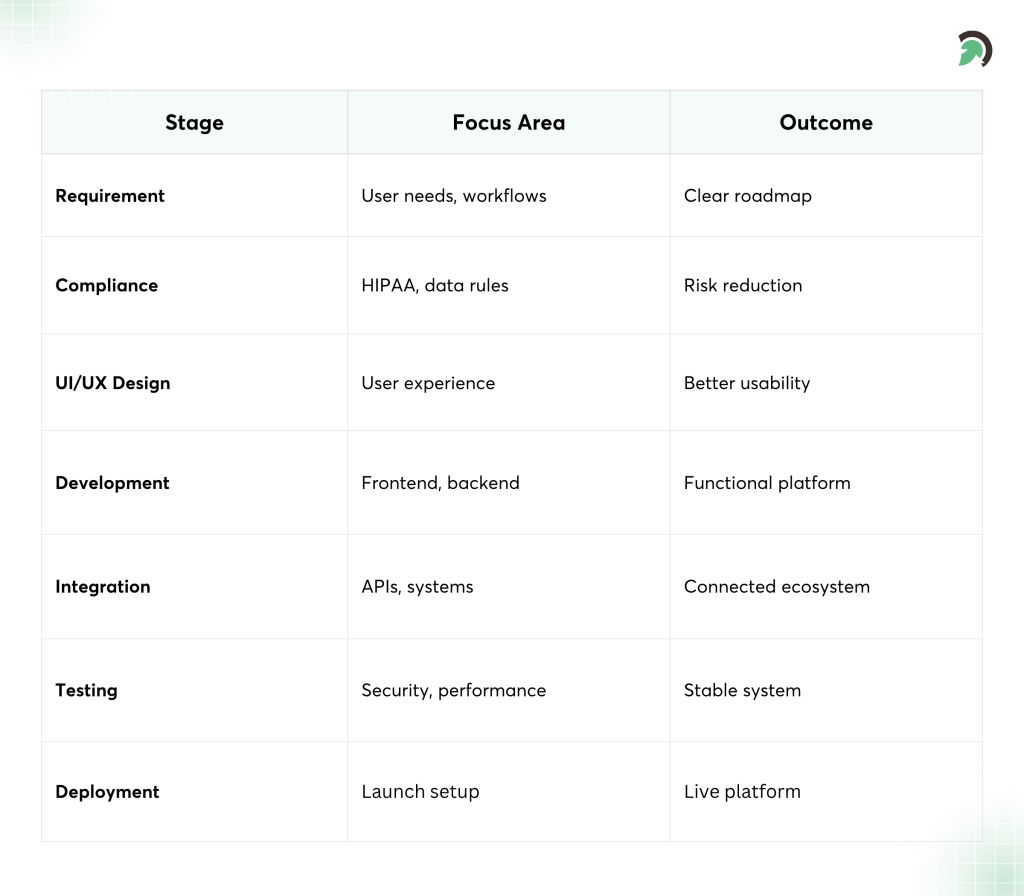
How Tele-Behavioral Health Platform Development Works
Technology Stack for Tele-Behavioral Health Platforms
Frontend Technologies
- React
- Angular
- Flutter (for cross-platform mobile apps)
Backend Technologies
- Node.js
- Python
- Java
Cloud and Hosting
- AWS
- Azure
- Google Cloud
Integrations
- EHR systems (when required for clinical documentation workflows)
- Payment gateways (for subscriptions, sessions, or billing flows)
- Video APIs (for secure teletherapy sessions)
If you’re planning a virtual therapy platform development project, a flexible integration strategy usually saves time later especially when you’re connecting multiple systems.
Security and Compliance Requirements
Key Regulations
- HIPAA (USA): protection of health information
- GDPR (EU): privacy and data processing rules
- Local healthcare regulations vary by state and jurisdiction
Security Measures
- Data encryption in transit and at rest
- Secure authentication (strong identity verification and session controls)
- Role-based access control and audit logs to track access and changes
Data Privacy Considerations
- Consent management (what data is collected, why, and for how long)
- Data storage and retention policies aligned with compliance requirements
- Patient controls where appropriate (preferences, message visibility, access permissions)
Even the best clinician workflows fail if trust breaks. Security and compliance are what make trust scalable.
Benefits of Tele-Behavioral Health Platform Development
For Healthcare Providers
- Improved operational efficiency through streamlined documentation and scheduling
- Wider patient reach without geography becoming a limiting factor
For Patients
- Easy access to care without long travel or long wait times
- Reduced stigma and friction compared to in-person-only support
For Organizations
- Scalable healthcare delivery as demand increases
- Cost optimization through better workflow efficiency and reduced overhead

Enable Better Care Delivery With the Right Platform
Challenges in Tele-Behavioral Health Platform Development
-
Regulatory Complexity
Healthcare privacy and regional compliance requirements can be complex. The challenge is aligning product design, data flows, and vendor contracts to meet those obligations.
-
Data Security Risks
Sensitive mental health data is highly valuable. A single security gap, whether in authentication, logging, or third-party integrations, can create a major risk.
-
Integration with Existing Systems
Many clinics already rely on EHR systems, scheduling tools, and reporting workflows. Integration can slow projects if it’s not planned early.
-
User Adoption Barriers
If onboarding is too complex or sessions feel unreliable, adoption drops. Behavioral health products must feel safe, predictable, and easy to use, especially for patients who may not have the best experience with technology.
Latest Trends in Tele-Behavioral Health Platforms
-
AI in Mental Healthcare
AI is increasingly used for insights, triage-style support, and personalization. The key is designing responsibly clear boundaries, clinician review, and transparency.
-
Virtual Therapy Enhancements
Expect richer session experiences: better scheduling logic, smoother session transitions, and improved post-session follow-up flows.
-
Wearable Integration
Wearables and sensor data are expanding beyond wellness into mental health signals, especially when combined with patient-reported outcomes.
-
Personalized Treatment Plans
Platforms are moving toward individualized care journeys with tailored check-ins, content recommendations, and clinician-informed adjustments.
-
Real-Time Data Analytics
If you’re evaluating tele-mental health platform development or a broader behavioral health telehealth software build, treat these trends as inputs, not as distractions. The right approach balances innovation with reliability and compliance.
Quick Stat:
According to MarketsandMarkets, the digital health market is expected to grow at a CAGR of over 20%, fueled by the rapid adoption of AI and remote healthcare solutions.